Let’s party like it’s AD 85!

Two thousand years ago Romans didn’t hold back celebrating. Especially during December. According to a book I’ve just read, Roman Timetable by Simon James Young, here is a list of Roman festivals just for December:

3/12/11 – Bona Dea (the good goddess) for women only; games, music and dancing.
5/12/11 – Faunus (god of the wild countryside)
8/12/11 – Tiberinus (spirit of the river Tiber) and Gaia (Earth)
13/12/11–24/12/11 Saturnalia (god Saturn) gift-giving, feasting, decorating.
13/12/11 – Tellus (ancient earth goddess)
15/12/11 – Consualia (Consus, god of the granary connected with safekeeping of the harvest)
19/12/11 –Iuventas (goddess of youth,a celebration for all boys coming of age (14)
19/12/11 – Opalia (Ops was the personification of abundance)
21/12/11 – Sol Invictus (Unconquered Sun, festival held on the winter solstice)
23/12/11 – Larentalia (possibly related to the she-wolf who suckled Romulus and Remus).

Saturnalia was by far the biggest celebration lasting many days and giving people the excuse for many excesses. Here’s how Seneca the Younger described it, in a Scroogy way, in the late first century AD:

“This is the month of December, when the whole city is aglow with excitement. License has been given for intemperate behaviour by the general public. Everywhere you can hear the sound of elaborate preparations, as if there were some differences between the Saturnalia and regular business days. The distinction is fading. I think that man was quite right who said, ‘December used to be a month; now it’s the whole year.’”

This festive season waned during the bleak Middle Ages with the advent of Christianity and the banning of Roman gods and festivals. But the human spirit can’t be kept down and we have revived winter celebrations to Roman proportions in the last couple hundred years. Now we call it Christmas, Hanukkah, or Kwanza; whatever we call it, let’s embrace the joy of the season.
Bring on December!

Let’s party like it’s AD 85! Read More »

No TV? No Internet? Trajan had an app for that.

Trajan erected his famed column in AD 113 and it was an original and memorable way to broadcast his success in defeating one of Rome’s long-time enemies, the Dacians and their ruler Decebalus. The column was covered in carved depictions of events that happened during his campaigns in Dacia (modern Romania) on the Danube frontier in AD 101-102 and 105-106, and these have been very useful to historians, leaving behind a wealth of visual details about Roman military and social history.

Trajan’s Column Base

The column stood between the two libraries of the Forum in Rome and people could read the painted graphic scenes almost the entire height of the column. These scenes wind up for a total length of 656 feet (200 m) and include 2500 figures. The column was built of Parian marble and has a height of 125 feet (38 m) and a base diameter of 13 feet (3.83 m).

The story goes round and round

Trajan’s column still stands today in Rome and I must have seen it 30 years ago when I last visited, though I don’t remember because I didn’t know what I was looking at then. But I recently saw a life-size reproduction of the column at the Victoria and Albert Museum in London. Of course it is on my list of must-sees when I return to Rome. The pictures here are from the V&A.

Victoria and Albert Trajan’s Column Copy

You have to love the V&A – it looks like there is some kind of medieval pajama party going on beside the column!

No TV? No Internet? Trajan had an app for that. Read More »

A Stone’s Throw

One September morning last year two older couples were enjoying their morning coffee at St. Swithin’s church in Lincoln, UK when I had to ask them to move. Problem was their little card table in the church hall was right beside a 2,000 year old Roman altar and I couldn’t get a good picture of it without disturbing them. They were very accommodating, though, even inviting me to join them for coffee.

To the Goddesses, the Fates and the Deities of Augustus Caius Antistius Frontinus, being curator for the third time, erects this altar at his own cost

People over the years, including the Romans themselves, recycled stones in later buildings. This altar, dedicated by Augustus Caius Antistius Frontinus, was reused in the fourth century for Lincoln’s East Wall and only discovered in the 1870s when St. Swithin’s was built. Other signs of recycling in Lincoln include Roman bricks in a cottage chimney and a Roman wall incorporated into a much later shop front.

Lincoln Cottage Chimney with Roman Bricks
Lincoln Shop with Roman Wall

I started thinking about the recycling of Roman stones when writing about Maryport on England’s west coast. Here the entire fort of Alauna, built in AD 120s, was dismantled in the 18th century to build the new town of Maryport. Thankfully at the time Colonel Humphrey Senhouse hired a man to record and rescue any inscribed or carved stonework, adding to a collection started by his ancestor John Senhouse in 1570. Today the Senhouse Roman Museum has the largest collection of Roman military altar stones and inscriptions in Britain.

All that remains of Alauna Fort

Another example is found in Caerwent, Wales, where inside the village church is a statue base with one of the most important inscriptions from Roman Britain, the Pulinus inscription. This early 3rd century dedication by Tiberius Claudius Paulinus, commander of the Second Augusta Legion, gives details about military and civilian careers, as well as civil administration in Roman Britain. It had been part of a post Roman building in the village.

All these moving stones are pieces in the puzzle of ancient history, and one never knows where they’ll turn up.

A Stone’s Throw Read More »

Roman Witches

Hideous women performing strange and perverse nocturnal acts, summoning the power of the demons who dwell between the earth and the underworld, between life and death. Witches haven’t changed much in 2000 years and we have no trouble recognizing the witches of Roman literature.

Canidia and Sagana– Horace wrote two poems about these witches, one slightly humorous and the other quite sinister.

In Satire 1.8, Canidia and Sagana are dressed in black, have pale skin, long nails and wild hair. They shriek and cackle. They come to a graveyard at night when there is a full moon and pick herbs, tear apart a lamb and pour blood on graves to conjure up spirits. They bury a wolf’s beard and the fang of a spotted snake and burn a wax doll. But everything turns slightly farcical when the Priapus statue, who is narrating the poem, farts. The startled witches run away, one losing her false teeth and the other her wig.

In Epode 5, the two witches are uglier still. Canidia has locks entwined with twisting vipers and Sagana’s hair stands on end like the bristles of a charging boar. They are about to kill a boy in order to make a love potion. Canidia wants to ensnare Varus and needs a powerful potion using the liver and marrow of a boy.

As well as these, the witches need many other bizarre items for their potion: barren wild-fig wood that sprouts from gravestone cracks; cypress from a dead man’s door; screech owl’s eggs besmeared with gore of poison-toad; herbs produced in Iolchos and Hiberia abundant in the weeds of bane; and bones snatched from the jaws of starving dogs.

Erichto– In the Pharsalia, Lucan created Erichto to be the most hideous of all witches, who frightens the very gods themselves. Erichto shuns other witches for being too tame. Not only does she desecrate dead bodies, she creates her own. Lucan lists her crimes against humanity: she steals the bloom off the face of a child; she cuts the hair of a dead adolescent; she snatches babies from their mothers’ wombs; and she bends over a dead body to kiss it, opening the mouth with her teeth, biting the tongue, then sending a hissed message of terror down the throat to the shades of Styx.

Dido– When Dido, in Virgil’s Aeniad, is abandoned by Aeneas, she enlists the help of a priestess who can control the desires of others and the forces of nature. The priestess chants spells to stop the flow of rivers, to make stars move backward and trees walk down mountains. Dido herself puts a curse on Aeneas and all his descendants by calling on both gods and demons, including Juno, Hecate and the avenging Furies, to do her bidding.

Simaetha– Simaetha in Virgil’s Eclogue 8, drones incantations to bring her lover, Daphnis, back home to her. She carries out rituals around a fire, twisting three strands of three threads around his image and carrying it three times around an altar. She puts clay and wax figures of Daphnis into a fire, sprinkling barley meal and laurel twigs, so Daphnis will return to her again.

Pamphile – In Apuleius’ The Golden Ass,Lucius is curious about magic and travels to Thessaly in Greece, famed for its witches. He stays at the home of Pamphile, a woman reported to be a witch and skilled in all forms of necromancy. She can plunge the light of heaven into darkness simply by breathing on twigs or pebbles. Lucius drinks one of her potions and turns into an ass.

Happy Halloween!


Roman Witches Read More »

Palma Non Sine Pulvere

Hadrian’s Wall along the crags

Over the weekend I put on a slideshow for a group who want to hike Hadrian’s Wall next spring. What struck me as I was putting it together was that most of the remains are in the hilly parts of the walk. The flat lands on either coast, from the west coast at Bowness-on-Solway and east of Carlisle to Walton, as well as west of Newcastle, have very few remains.

This makes sense once you think about it because over the centuries people would have taken the stones for building material from the parts of the wall where they were easiest to move, the flat parts. Also they would have used many more stones closest to the large settlements of Carlisle and Newcastle.

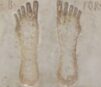
So to see the best remains – the forts at Birdoswald, Housesteads and Chesters, the many milecastles, turrets and Carrawburgh Mithras Temple, as well as seeing the stunning views of what is left of Hadrian’s Wall snaking along the craggy Whin Sill – our group will have to get in shape over the winter to do the necessary hiking up and down the hills of Cumbria and Northumberland to see the Roman footprints of Hadrian’s Wall.

Palma Non Sine Pulvere – No Reward Without Effort, as my old high school motto says.
 

Palma Non Sine Pulvere Read More »

New Digs

Many sites of ancient Roman ruins lie frozen in time. Not in the time of the Romans, but at the time when they were excavated decades ago. Fortunately others have active excavations that continue to expand our knowledge of the Roman world.

Six years ago I made a quick visit to Hadrian’s Wall and saw both Housesteads Roman Fort and Vindolanda. When I visited them again last autumn, I found that Housesteads hadn’t changed at all but Vindolanda’s exposed remains had expanded considerably.

Vindolandais excavated every year by experts and volunteers. They have a unique program and anyone can apply to spend a week or two excavating at Vindolanda (http://vindolanda.com).

Other sites in Britain that are also experiencing a renaissance of excavation:

  • In Norfolk archaeologists are digging for three weeks this summer at the site of Venta Icenorumat Caistor-St-Edmund. When I visited this site four years ago, all that was visible were its earth covered walls. The excavations are open to the public until September 3, 2011 with a Family Day on Sunday, August 28th.
  • Archaeologists have been digging at Caerleonin Wales over the last year and have discovered the second known port of Roman Britain (the first one being in London). Here is a link to an article about this remarkable find that also includes a video with reconstructions of all of Caerleon’s Roman remains including the fort, amphitheatre and baths: http://www.guardian.co.uk/uk/2011/aug/23/archaeologists-discover-roman-port-wales
New Excavations at Vindolanda

New Digs Read More »